
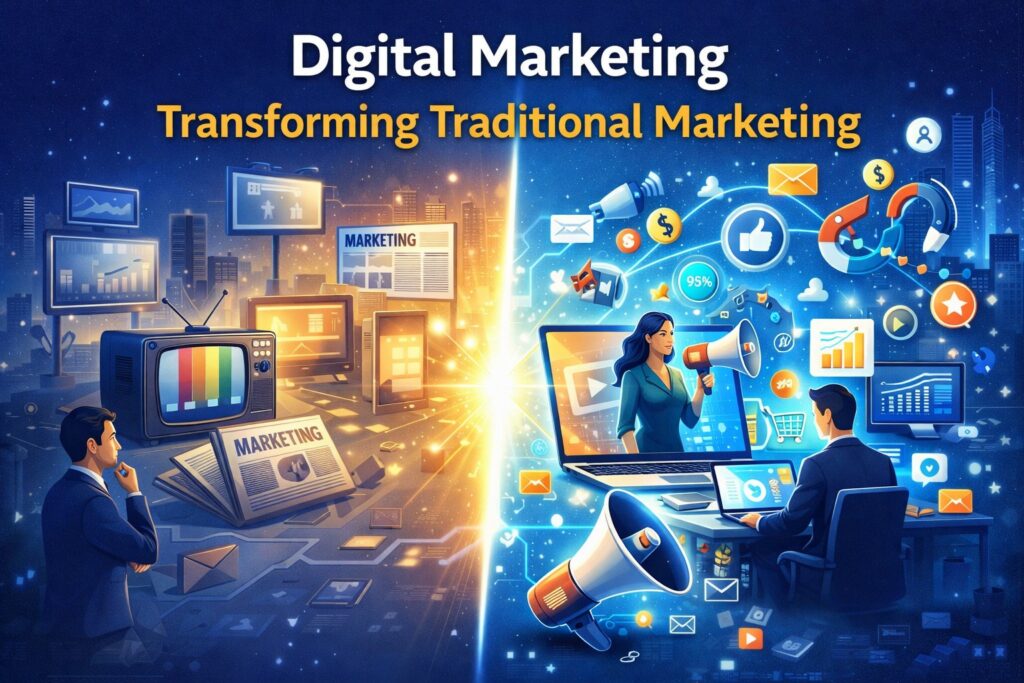
Digital Marketing in 2026 – Transforming Traditional Marketing, Not Replacing It
Digital marketing in 2026 is no longer just an alternative to traditional marketing — it has become the driving force behind modern business growth. However, rather than completely replacing traditional marketing, digital strategies are reshaping how traditional marketing works, making it more measurable, targeted, and interactive.
One of the biggest impacts of digital marketing is data-driven decision making. Traditional marketing methods like newspaper ads, hoardings, radio, and television were often difficult to measure in terms of exact return on investment. In 2026, digital marketing allows businesses to track user behavior, engagement, conversions, and customer journeys in real time. This has changed the mindset of companies from spending on advertising to investing in measurable marketing.
Another major shift is audience targeting. Traditional marketing focuses on mass audiences, whereas digital marketing allows businesses to target very specific audiences based on age, location, interests, profession, behavior, and even purchase intent. This has made marketing more efficient and cost-effective. Businesses are now combining traditional advertising with digital campaigns to retarget audiences who saw their offline advertisements.
Content marketing has also transformed traditional marketing communication. Earlier, marketing was mostly promotional, but in 2026, marketing is more about education, storytelling, and value creation. Brands are using blogs, videos, podcasts, and social media content to build relationships with customers instead of only pushing advertisements. Traditional marketing is now being used more for brand visibility, while digital marketing is used for engagement and conversion.
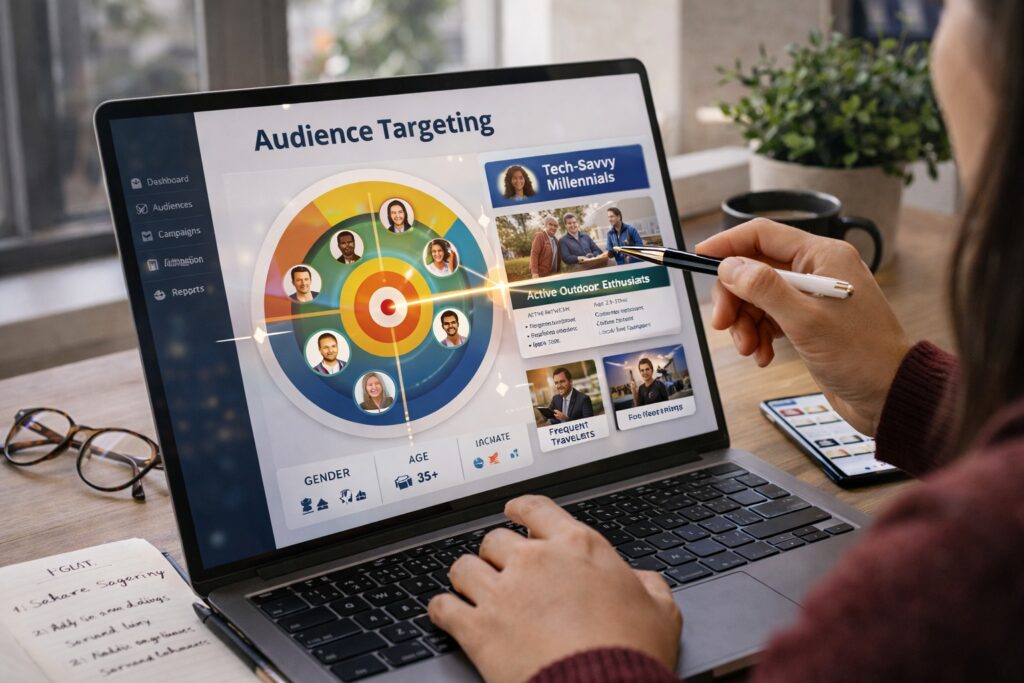
The rise of AI, automation, and personalization has further changed the marketing landscape. Businesses can now send personalized emails, show customized ads, and automate customer journeys. This level of personalization was never possible in traditional marketing. However, traditional marketing still plays a crucial role in building brand trust, local visibility, and offline presence.
In 2026, the most successful companies are not choosing between digital and traditional marketing — they are integrating both. For example, a company may run a billboard campaign with a QR code, a newspaper advertisement with a website link, or an event promotion supported by social media campaigns and email marketing. This integrated approach creates multiple customer touchpoints and improves brand recall.
Traditional marketing still works very well for local branding, events, exhibitions, retail businesses, and mass awareness, while digital marketing works best for lead generation, engagement, performance marketing, and global reach. The real impact of digital marketing is that it has made marketing more interactive, measurable, and customer-centric.
In conclusion, digital marketing in 2026 is not killing traditional marketing; it is making it smarter, more targeted, and more effective. Businesses that combine traditional marketing credibility with digital marketing intelligence are the ones that will grow the fastest in the modern marketing world.